
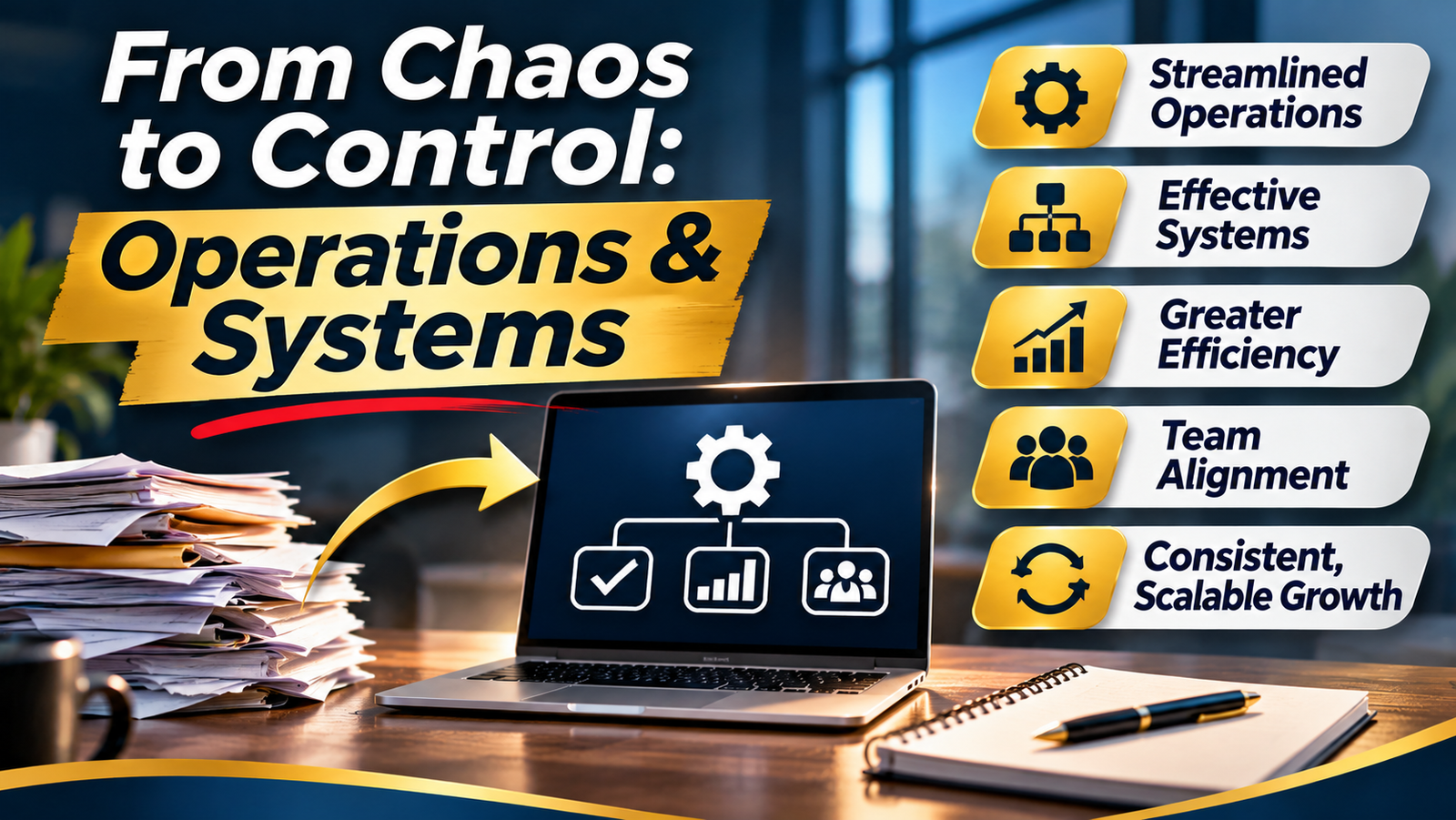
From Chaos to Control: Operations & Systems
In the fast-paced world of service businesses, achieving operational efficiency is crucial for success. With 5 to 20 employees and annual revenues between $1M and $5M, many business owners find themselves overwhelmed by chaotic processes that hinder growth and customer satisfaction. This article will explore how to transform your operations and systems from chaos to control, offering actionable steps and practical examples to guide you along the way.
Identifying the Problem
Many service business owners face common operational challenges that contribute to inefficiency and frustration. Here are a few key issues:
- Inefficient Processes: Disorganized workflows often lead to wasted time and resources.
- Lack of Standardization: Inconsistent procedures can result in varying levels of service quality and customer dissatisfaction.
- Difficulty in Scaling: As businesses grow, chaotic operations can prevent them from maintaining quality service.
- Poor Communication: Ineffective communication among team members can cause misunderstandings and errors.
- Resource Management: Mismanagement of human and financial resources can lead to burnout and financial strain.
Consider a small marketing agency struggling with project management. The team often misses deadlines, leading to unhappy clients and lost revenue. The lack of a structured approach to managing projects results in confusion and inefficiency. This scenario illustrates the need for a robust operations and systems strategy.
Actionable Framework for Improvement
Transitioning from chaos to control involves a systematic approach. Here’s a step-by-step framework to help you improve your operations and systems:
Step 1: Assess Current Operations
The first step is to take a close look at your existing processes. Mapping out workflows can help identify bottlenecks and inefficiencies. Consider using tools like:
- Flowcharts to visualize processes
- Process mapping software for detailed analysis
Step 2: Identify Key Areas for Improvement
Once you have assessed your operations, prioritize the areas that need the most attention. Focus on the processes that have the greatest impact on customer satisfaction and overall efficiency.
Step 3: Implement Standard Operating Procedures (SOPs)
Documenting your processes is essential for consistency. Create Standard Operating Procedures (SOPs) for key tasks. This not only ensures that everyone is on the same page but also simplifies training for new employees. Consider the following:
- Involve your team in the SOP creation process to gather insights and foster buy-in.
- Regularly update SOPs to reflect changes in processes or technology.
Step 4: Utilize Technology
Technology can significantly streamline operations. Explore tools that fit your business needs, such as:
- Project Management Software: Tools like Trello or Asana can help manage tasks and deadlines effectively.
- Communication Platforms: Utilize Slack or Microsoft Teams to improve team communication.
- Scheduling Software: Implement systems like Calendly or Acuity to manage appointments and reduce scheduling errors.
Step 5: Monitor and Adjust
Establish Key Performance Indicators (KPIs) to measure the effectiveness of your operational improvements. Regularly review these metrics and solicit feedback from your team to identify areas for further enhancement. Adjust your strategies as necessary to ensure continuous improvement.
Illustrative Examples
Let’s look at how two service businesses successfully implemented these steps:
Case Study 1: Local Cleaning Service
A local cleaning service faced frequent scheduling errors, leading to customer complaints. By adopting a digital booking system, they streamlined their scheduling process. This not only reduced errors but also improved customer satisfaction, as clients could easily book appointments online.
Case Study 2: Consulting Firm
A consulting firm struggled with client communication, leading to misunderstandings and project delays. By implementing a project management tool, the team improved transparency and accountability. Clients could track project progress, leading to enhanced trust and satisfaction.
Practical Checklist/Next Steps
To facilitate your transition from chaos to control, use the following checklist:
- Assess Current Operations: Create a flowchart of your key processes.
- Identify Improvement Areas: Prioritize processes based on impact.
- Create SOPs: Document procedures for essential tasks.
- Select Technology Tools: Research and choose tools that best fit your needs.
- Establish KPIs: Define metrics to measure success.
- Solicit Feedback: Regularly gather input from your team and clients.
- Adjust as Needed: Be open to refining processes based on performance data.
Conclusion
Moving from chaos to control in your operations and systems is not just a goal; it is a necessity for sustainable growth and success in the service industry. By assessing your current practices, implementing standardized procedures, utilizing technology, and continuously monitoring your progress, you can create a more efficient and effective business.
Take the first step today to improve your operations and systems. For more resources and guidance, visit Wired2Lead to explore tools and insights tailored for service business owners like you.