
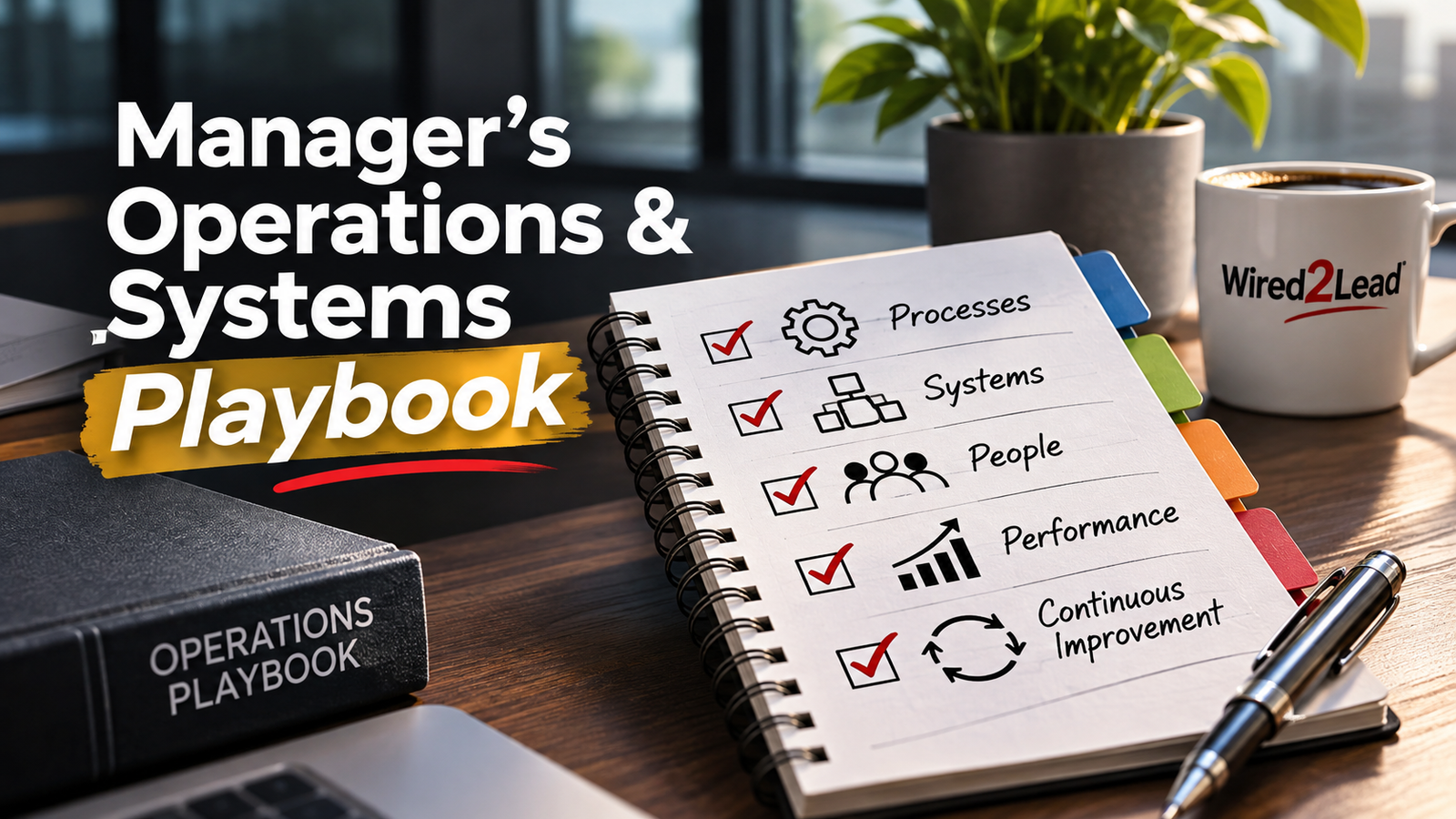
Manager's Operations & Systems Playbook
In the fast-paced world of service businesses, effective management of operations and systems is crucial for achieving success and sustaining growth. For owners of small to medium-sized service businesses, understanding and optimizing these elements can lead to improved efficiency, better employee management, and enhanced customer satisfaction.
Understanding Operations & Systems
Operations refer to the day-to-day activities that keep a business running, while systems are the structured processes and workflows that support these activities. Together, they form the backbone of any service-oriented business. When managed effectively, operations and systems can lead to streamlined processes, reduced costs, and improved service delivery.
Identifying Inefficiencies
Before implementing changes, it’s essential to recognize the signs of operational inefficiencies. Here are some common indicators:
- Frequent scheduling conflicts or missed deadlines.
- High employee turnover or dissatisfaction.
- Inconsistent service quality or customer complaints.
- Wasted time due to unclear processes or duplicated efforts.
To assess your current operations, consider using tools such as process mapping. This visual representation allows you to see how tasks flow and identify bottlenecks or redundancies.
Framework for Streamlining Operations
Creating an operations playbook can help you systematically improve your business processes. Follow these steps:
Step 1: Define Key Processes
Identify the core processes that are critical to your business. This may include customer onboarding, service delivery, billing, and customer support.
Step 2: Document Workflows
For each key process, document the workflow. This should include detailed steps, responsible parties, and necessary tools. Clear documentation helps ensure everyone understands their roles and responsibilities.
Step 3: Assign Responsibilities
Clearly define who is responsible for each task within the workflow. This accountability helps prevent tasks from falling through the cracks and ensures that team members are aware of their duties.
Step 4: Implement Technology Solutions
Explore technology tools that can enhance your operations. For example, a cloud-based scheduling tool can minimize scheduling conflicts and improve communication among team members.
Step 5: Monitor and Optimize
Once changes are implemented, continuously monitor the processes to identify areas for improvement. Use feedback from employees and customers to make necessary adjustments.
Illustrative Examples
To understand the practical application of this framework, consider the following examples:
Example 1: A Cleaning Service
A small cleaning service struggled with scheduling conflicts, leading to customer dissatisfaction. By adopting a cloud-based scheduling tool, the team reduced scheduling conflicts by 30%, improved communication, and provided better service to clients.
Example 2: A Consulting Firm
A consulting firm faced challenges with its client onboarding process. By documenting the workflow and creating a standardized onboarding procedure, the firm improved client satisfaction scores and reduced onboarding time significantly.
Practical Checklist for Improving Operations & Systems
Use this checklist to guide your efforts in enhancing your operations and systems:
- Identify and document key processes.
- Assess current workflows for inefficiencies.
- Assign clear responsibilities for each task.
- Research and implement technology solutions.
- Gather feedback from employees and customers.
- Monitor performance metrics to track improvements.
Additionally, consider tracking the following key performance indicators (KPIs) to measure progress:
- Customer satisfaction scores.
- Employee turnover rates.
- Time taken to complete key processes.
- Number of service errors or complaints.
Conclusion
Having a solid operations and systems playbook is essential for the success of any service business. By identifying inefficiencies, streamlining processes, and leveraging technology, you can create a more efficient and effective organization. Remember, the goal is not just to implement changes but to foster a culture of continuous improvement.
As you embark on this journey, regularly assess and adjust your processes to ensure they meet the evolving needs of your business. For more resources on optimizing your operations and systems, visit Wired2Lead and explore our extensive library of tools and insights.