
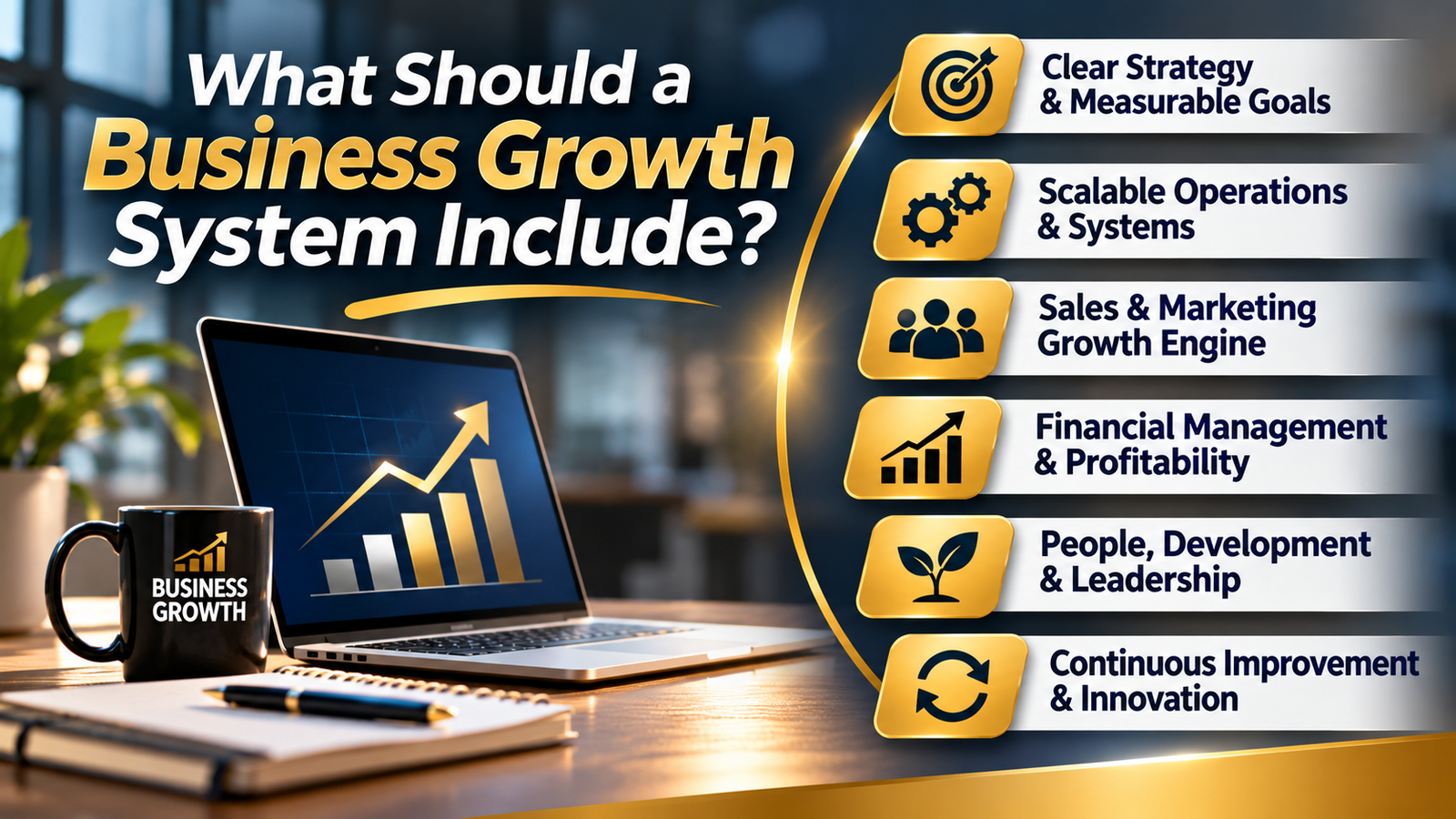
What should a Business Growth System Include?
In today's competitive landscape, having a robust business growth system is essential for service-based businesses looking to expand and thrive. A well-defined growth system not only helps you identify opportunities but also provides a structured approach to achieving your goals. This article will explore the essential components of a business growth system, practical steps for implementation, common pitfalls to avoid, and ways to measure your success.
Essential Components of a Business Growth System
A comprehensive business growth system should include the following key components:
1. Market Analysis
Understanding your market and customer needs is the foundation of any growth strategy. Conducting thorough market research allows you to identify trends, customer preferences, and competitive dynamics.
- Conduct surveys or focus groups with existing customers.
- Analyze competitors to understand their strengths and weaknesses.
- Utilize online tools to gather data on market trends.
2. Strategic Planning
Setting clear goals and objectives is crucial for guiding your growth efforts. A strategic plan should outline your vision, mission, and specific targets.
- Define short-term and long-term goals.
- Align your goals with your overall business vision.
- Ensure goals are Specific, Measurable, Achievable, Relevant, and Time-bound (SMART).
3. Marketing Strategy
Developing an effective marketing strategy is vital for reaching your target audience. Consider various channels to promote your services.
- Utilize social media platforms to engage with customers.
- Implement email marketing campaigns to communicate offers and updates.
- Invest in search engine optimization (SEO) to improve your online visibility.
4. Sales Process
A streamlined sales process helps convert leads into customers efficiently. Evaluate your current sales approach and identify areas for improvement.
- Define the stages of your sales funnel.
- Train your team on effective sales techniques.
- Implement a customer relationship management (CRM) system to track interactions.
5. Customer Retention
It’s often more cost-effective to retain existing customers than to acquire new ones. Develop strategies to keep your customers engaged and satisfied.
- Regularly ask for feedback and act on it.
- Offer loyalty programs or incentives for repeat business.
- Maintain consistent communication to nurture relationships.
6. Performance Metrics
Measuring the effectiveness of your growth initiatives is essential to ensure you’re on the right track. Identify key performance indicators (KPIs) that align with your goals.
- Track sales growth, customer acquisition costs, and customer lifetime value.
- Analyze website traffic and conversion rates.
- Monitor customer satisfaction scores through surveys.
Implementation Steps
Once you have defined the components of your business growth system, follow these steps to implement it effectively:
- Identify Your Current Position: Assess where your business currently stands in terms of market share, customer satisfaction, and financial health.
- Set Specific, Measurable Goals: Use the SMART criteria to define clear objectives for growth.
- Choose Strategies and Tools: Select marketing and sales strategies that align with your goals and fit your business model. Research tools that can assist you in implementing these strategies.
- Create an Action Plan: Develop a detailed action plan with timelines and responsibilities assigned to team members.
Common Mistakes to Avoid
As you develop your business growth system, be mindful of these common pitfalls:
- Lack of Research and Planning: Skipping thorough market analysis can lead to misguided strategies.
- Ignoring Customer Feedback: Failing to listen to your customers can result in missed opportunities for improvement.
- Not Adapting Strategies: Rigidly sticking to a plan without adjusting based on performance data can hinder growth.
Measuring Success
To evaluate the success of your growth initiatives, consider the following metrics:
- Sales Growth: Monitor changes in revenue over time to assess overall growth.
- Customer Acquisition Costs: Calculate how much you spend to acquire a new customer and aim to reduce this over time.
- Customer Lifetime Value: Understand how much revenue a customer generates throughout their relationship with your business.
Utilize tools such as CRM systems, Google Analytics, and financial software to track these metrics effectively. Regularly review your performance data to make informed decisions about your growth strategies.
Conclusion
Implementing a structured business growth system is crucial for service-based businesses aiming to expand and succeed. By focusing on market analysis, strategic planning, effective marketing, streamlined sales processes, customer retention, and performance metrics, you can create a solid foundation for growth.
Take actionable steps today to develop your business growth system. Remember, the key to success lies in continuous evaluation and adaptation of your strategies. For more resources and support on your journey to business growth, visit Wired2Lead.